Monday, November 11, 2013
Reflection
Types of Words and Texts
I was wary of this assignment at first, to be honest. I thought that I used context clues too much to really struggle to understand any new word. I was surprised to see that it was fairly easy to find words that I could look up for this assignment.
I never realized that I read so many magazines. I never have considered myself as someone who reads magazines - but two of my fourteen words came from magazines (dunridge and ossified). This blog made me think about where I was getting information and what I was reading. Without looking closely at my reading, I thought that I mostly read texts for grad classes and searched on the internet for lessons. I felt like I hadn't been reading a lot lately - and certain nothing that would produce new words. But, in reality, I found new words all over the place.
I tried to stay away from science heavy vocabulary - it was tempting, but I wanted this blog to be about words that I could use and that the others in my class might also be able to use. I seemed to find a lot of words that were content specific or rarely used. I think that only a few of these words I will incorporate into my everyday language. However, many of these words are those that I had confused with another - so these I can use and be confident that I am now correct in using them.
Vocabulary Tests
I think I gained a better understanding of what it means to master a word. I think that it makes sense that to truly know a word, a person has to be able to spell the word, define the word, use the word in context, and even connect the word to others. Vocabulary should be more than being able to spit out a definition from a dictionary or textbook.
The spelling part was still terrifying, though.
Learning Impacts and Implications
I have a greater understanding of the texts that I looked up a word from. I think that this is because I was interacting with the text for longer than just to absorb the information. As I wrote about in my ameliorate post, often I just use the context clues and move on. I don't spend time thinking about what a word might mean. This blog made me stop and notice when a word was new or something I couldn't quite define. Then, once I had looked up the word, I went back and thought about the word in context and how the meaning would have changed if a different word was used.
I think this is a good example of writing to learn. I had to stop and think, organize, and express my thoughts on the word, which made me gain a better understanding of the word and of the text that the word was in.
I think that this looking for new words and thinking about their meaning and purpose within the text has become somewhat of a habit. I can't say that I will spend any more time writing to learn these new words or helping me understand the text a little better. But I will continue to consider new words and notice when I need to look up a word and actually look it up!

Saturday, November 9, 2013
Last Vocabulary! - Consortium
When and where: I participated in STANYS at the beginning of last week. It was a wealth of information and I met some really wonderful and helpful people. However, all of my sessions on Monday were not very helpful. Some were even downright boring. For example, I attended one called "The Future of Earth Science in NYS" which I imagined to be about the effects of CCSS or best practices. But no, it was a couple of textbook representatives who didn't explain who they were or even what their textbook was - just "so, we wrote this textbook" - and told us that Next Gen standards were going to be difficult for everyone else in the country but not NYS. Thanks. That was helpful. Anyhow, they were talking about STANYS role in helping with the Next Gen standards and said that a consortium had come together, but it was mostly STANYS executives.
Level of familiarity: I had heard of a consortium agreement, but I didn't know that a group of people could be a consortium. I thought that a consortium agreement was an agreement that people had compromised over and no one really liked, but it was the only thing they could agree on.
What it means: Merriam Webster online dictionary defines consortium as a group of people that decide to work together.
Reflective commentary: Considering what consortium actually means, what I thought a consortium agreement was is hilarious. Mainly because I feel like nothing gets accomplished when people work together. Ideally, people are bringing their best ideas and having others refine and add to those ideas. But in reality, just as textbook lady was telling us, the results are not up to anyone's standards and everyone has compromised and isn't truly happy with the product.
Saturday, November 2, 2013
Week 9 - Post 1: Ameliorate
When and where: My friend was showing me a game on her iPad that you can create your own Jurassic Park. I adore the movie so I couldn't resist checking it out. In order to advance to different levels, different characters give you tasks to accomplish in the park. In this particular task, Hammond says that he doesn't have the money to buy this dinosaur he wants, so to ameliorate the problem... blah blah blah do this and earn coins.
Level of familiarity: I could guess from the context clues that ameliorate means to fix or make better, but I couldn't define the word. It seemed like a word I must have heard somewhere before.
What it means: Merriam Webster online dictionary defines ameliorate as a verb that means to make better. But not "better". They use the word "tolerable". To me, this means that ameliorate means to make only marginally better, not perfect or the best it could be.
Reflective commentary: This word makes me think about directions and the words we use in them. I totally could have moved on and not cared what this word meant. Honestly, if I wasn't working on this blog, I doubt I would have bothered to look it up. I could easily accomplish the task without needing to know the word. In fact, I could have easily understood the underlying purpose of the task without knowing the word. It was unnecessary for the task completion.
Sunday, October 27, 2013
Week 8 - Post 3: Ossified
When and where: In the article "Repower LA" in the November/December 2013 issue of Sierra Magazine. My significant other's grandma loves to shower me with assorted magazines when we travel out to her house. And when the Bills are losing, I especially love to get them. I hadn't read Sierra before - I usually aim for Smithsonian, National Geographic, and Popular Science. I was drawn to this issue because of a particularly snowy bison on the cover, and its relevance to the annihilation of the buffaloes on the TV.
The article discusses how a group of politicians and members of the Los Angeles Department of Water and Power used to use scare tactics to get citizens to support water rights for specific rivers. The Department is trying to change that attitude, and help LA revamp its water and energy usage while providing jobs for local people. The article asks, "How did an ossified utility come to link arms with activists and environmentalists?"
 Level of familiarity: Honestly, the first image that popped into my head was of a bird. Like a giant kiwi kind of bird. I knew this wasn't right, because ossified is used in contrast with activists, and in comparison to using scare tactics. So I'm thinking ossified must be an adjective that refers to something that doesn't support change.
What it means: Merriam Webster online dictionary defines ossify as an adjective that is used to describe something that is unable to change or turned to a bone-like substance.
Reflective commentary: Even though the wrong image popped into my head, I knew that I had heard this word before. I remember hearing about diseases that turn muscle into "bone". It makes sense that a word that means to turn to bone would also mean for a company to resist change, and wont bend. It's like a metaphor all wrapped up in one word.
The article discusses how a group of politicians and members of the Los Angeles Department of Water and Power used to use scare tactics to get citizens to support water rights for specific rivers. The Department is trying to change that attitude, and help LA revamp its water and energy usage while providing jobs for local people. The article asks, "How did an ossified utility come to link arms with activists and environmentalists?"
Level of familiarity: Honestly, the first image that popped into my head was of a bird. Like a giant kiwi kind of bird. I knew this wasn't right, because ossified is used in contrast with activists, and in comparison to using scare tactics. So I'm thinking ossified must be an adjective that refers to something that doesn't support change.What it means: Merriam Webster online dictionary defines ossify as an adjective that is used to describe something that is unable to change or turned to a bone-like substance.
Reflective commentary: Even though the wrong image popped into my head, I knew that I had heard this word before. I remember hearing about diseases that turn muscle into "bone". It makes sense that a word that means to turn to bone would also mean for a company to resist change, and wont bend. It's like a metaphor all wrapped up in one word.
Friday, October 25, 2013
Week 8 - Post 2: Gastronomist
This tells better as a story. I promise to have all of the required parts and to never use this format again, but please allow me to tell you how I learned this word in a story. And please don't judge me for my love of food.
 It has been an incredibly tough week, and today is Friday. I have a planning period at the end of the day and I usually have a snack and grade papers or organize for the next lesson or whatever. But this week has been a tough week. And so instead of planning, I went onto the internet and looked at pictures of food. It's very calming. As I was scrolling along, I starting thinking about Baked Alaska. Don't ask me how it popped into my head, I don't know. Maybe it's because I watched the Mythbuster's Alaska Special last night. But the more I thought about it, the more I couldn't decide if it was fish or ice cream. Or fish with ice cream. So I went to Wikipedia.org and checked out Baked Alaska. So technically, I could have picked Baked Alaska for my word, but I did know a little bit about it (it is ice cream by the way) and that is not the moral of my story.
As I was reading about Baked Alaska, I saw this: In 1969, the recently invented microwave oven enabled Hungarian physicist and molecular gastronomist Nicholas Kurti to produce a reverse Baked Alaska (also called a "Frozen Florida")—a frozen shell of meringue filled with hot liquor
Gastronomist?! As soon as I read the word, I knew what it meant. The Great University of They had come up with a name for people who study food. Like an economist of the gastrointestinal system. And Merriam Webster online dictionary proves it. ARE YOU KIDDING ME?
I love words. But in this moment, I am in love with how everything has a name. Just to satisfy my point:
- "interrobang" - the name of the "?!" mark at the end of a rhetorical question
- "tittle" - the point over a lower case "i" or "j" (or a small amount)
- And this, all of this: John Greene on Mental Floss
Week 8 - Post 1: Chelonian
When and where: The math teacher across the hall has this fantastic radio voice and I love listening to his lessons when I have planning periods. Earlier this week, I heard him holler down the hall at some students who were slowly getting to class after the bell rang: "That's quite the chelonian pace! Pick it up!"
Level of familiarity: I had never heard chelonian before, but I used my context clues and guessed that it meant to move slowly.
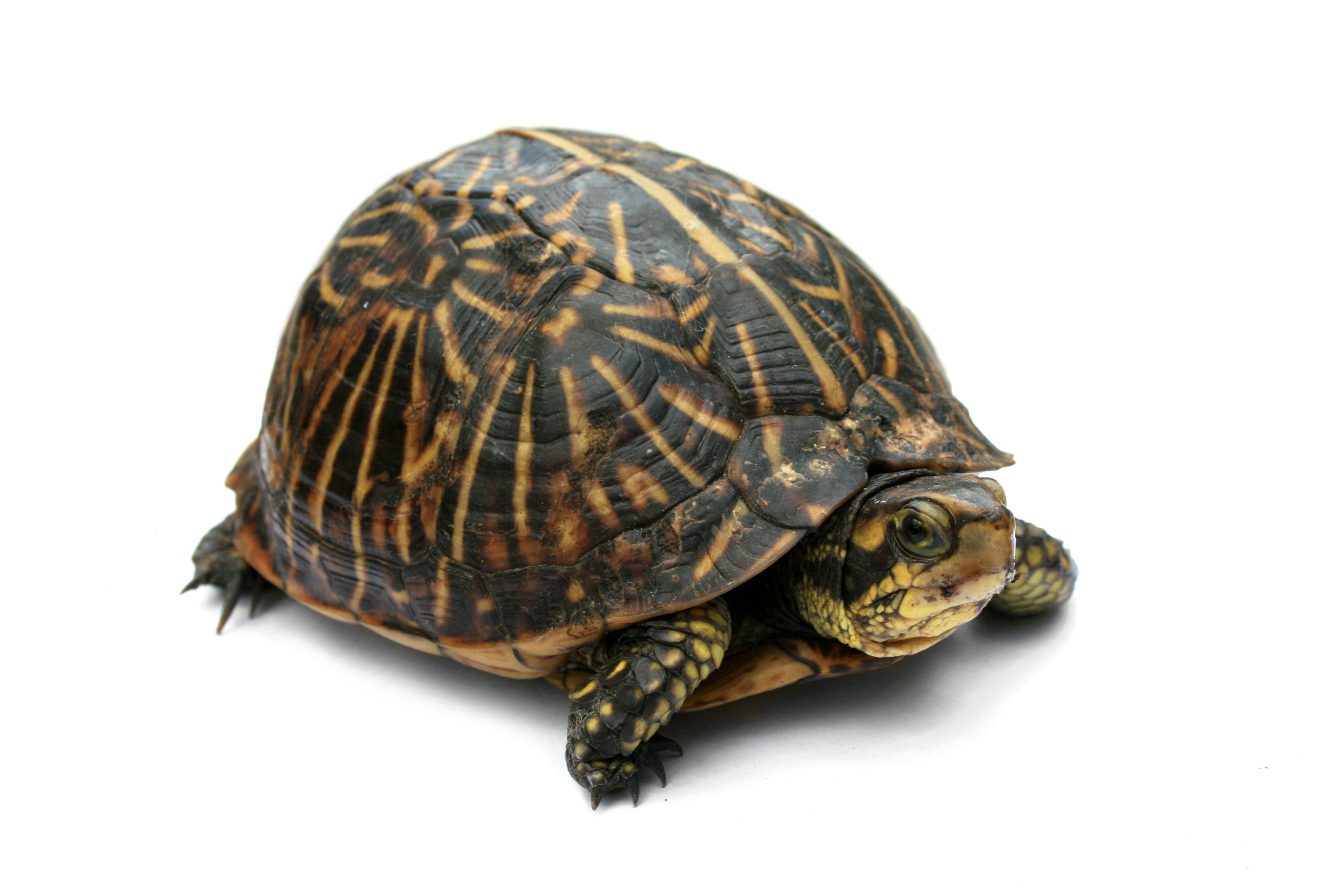
What it means: When I asked the math teacher, he said that it means "turtle" and that he had read a list of words that people should start using. Merriam Webster online dictionary defines chelonian as turtle as well, and can be used as a adjective to describe something that is like a turtle.
Reflective commentary: I love that he was literally comparing these slow students to a turtle! It took me quite some time to figure out how chelonian is spelled because I had heard it out loud. I'm not sure I would have recognized this word in print if I hadn't looked it up right when I heard it.
Level of familiarity: I had never heard chelonian before, but I used my context clues and guessed that it meant to move slowly.
What it means: When I asked the math teacher, he said that it means "turtle" and that he had read a list of words that people should start using. Merriam Webster online dictionary defines chelonian as turtle as well, and can be used as a adjective to describe something that is like a turtle.
Reflective commentary: I love that he was literally comparing these slow students to a turtle! It took me quite some time to figure out how chelonian is spelled because I had heard it out loud. I'm not sure I would have recognized this word in print if I hadn't looked it up right when I heard it.
Sunday, October 20, 2013
Week 7 - Post 2: Mercurial
When and where: While prepping for my reciprocal teaching assignment, I read through the vocabulary articles that Dr Hopkins posted on the Moodle site. The one that I chose, Flanigan & Greenwood - Effective Content Vocabulary Instruction in the Middle (if you are signed into Moodle - the link should work) used mercurial at the end to describe students "in the range of the strange" also known as middle schoolers.
Level of familiarity: Since they already claimed that middle schoolers are "strange" I figured it must have something in common. Before I looked it up, I considered what the root word might be, and I decided on something to do with mercury. Knowing that mercury was once used to soften beaver pelts used in hats, a practice that caused many hatters to go crazy after extended careers - hence, Mad Hatters - I figured that maybe mercurial had to do with "Mad Middle Schoolers" or otherwise refer to someone who is crazy.
What it means: Well I wasn't totally incorrect. Merriam Webster online dictionary defines mercurial as an adjective that describes something that is rapidly changing or lively and quick. When I think about the Mad Hatter, I would happily describe him as mercurial.
Reflective commentary: The more specific definition didn't change my understanding of the description of middle school students. However, the online dictionary's definition makes more sense with the introduction of the article, which states "Middle school students are transitional. The term, 'typical middle schooler' is automatically an oxymoron, for there is no such thing." Instead of simply crazy, they are specifically "crazy" because of their constantly changing lives, emotions, reactions, etc.
Level of familiarity: Since they already claimed that middle schoolers are "strange" I figured it must have something in common. Before I looked it up, I considered what the root word might be, and I decided on something to do with mercury. Knowing that mercury was once used to soften beaver pelts used in hats, a practice that caused many hatters to go crazy after extended careers - hence, Mad Hatters - I figured that maybe mercurial had to do with "Mad Middle Schoolers" or otherwise refer to someone who is crazy.
What it means: Well I wasn't totally incorrect. Merriam Webster online dictionary defines mercurial as an adjective that describes something that is rapidly changing or lively and quick. When I think about the Mad Hatter, I would happily describe him as mercurial.
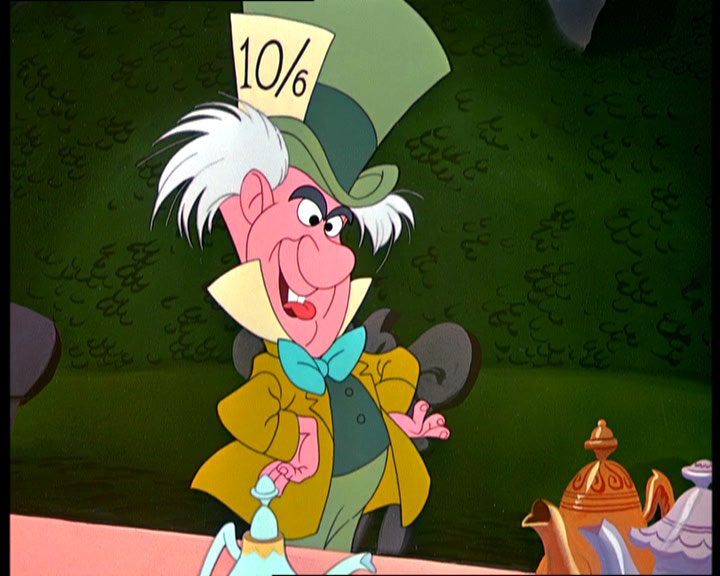 |
| aliceinwonderland.wikia.com |
Subscribe to:
Posts (Atom)