Sunday, October 27, 2013

Week 8 - Post 3: Ossified

When and where: In the article "Repower LA" in the November/December 2013 issue of Sierra Magazine.  My significant other's grandma loves to shower me with assorted magazines when we travel out to her house.  And when the Bills are losing, I especially love to get them.  I hadn't read Sierra before - I usually aim for Smithsonian, National Geographic, and Popular Science.  I was drawn to this issue because of a particularly snowy bison on the cover, and its relevance to the annihilation of the buffaloes on the TV.

The article discusses how a group of politicians and members of the Los Angeles Department of Water and Power used to use scare tactics to get citizens to support water rights for specific rivers.  The Department is trying to change that attitude, and help LA revamp its water and energy usage while providing jobs for local people.  The article asks, "How did an ossified utility come to link arms with activists and environmentalists?"

Level of familiarity: Honestly, the first image that popped into my head was of a bird.  Like a giant kiwi kind of bird.  I knew this wasn't right, because ossified is used in contrast with activists, and in comparison to using scare tactics.  So I'm thinking ossified must be an adjective that refers to something that doesn't support change.

What it means: Merriam Webster online dictionary defines ossify as an adjective that is used to describe something that is unable to change or turned to a bone-like substance.

Reflective commentary: Even though the wrong image popped into my head, I knew that I had heard this word before. I remember hearing about diseases that turn muscle into "bone".  It makes sense that a word that means to turn to bone would also mean for a company to resist change, and wont bend.  It's like a metaphor all wrapped up in one word.

Friday, October 25, 2013

Week 8 - Post 2: Gastronomist

This tells better as a story.  I promise to have all of the required parts and to never use this format again, but please allow me to tell you how I learned this word in a story.  And please don't judge me for my love of food.


It has been an incredibly tough week, and today is Friday.  I have a planning period at the end of the day and I usually have a snack and grade papers or organize for the next lesson or whatever.  But this week has been a tough week.  And so instead of planning, I went onto the internet and looked at pictures of food.  It's very calming.  As I was scrolling along, I starting thinking about Baked Alaska.  Don't ask me how it popped into my head, I don't know.  Maybe it's because I watched the Mythbuster's Alaska Special last night.  But the more I thought about it, the more I couldn't decide if it was fish or ice cream.  Or fish with ice cream.  So I went to Wikipedia.org and checked out Baked Alaska.  So technically, I could have picked Baked Alaska for my word, but I did know a little bit about it (it is ice cream by the way) and that is not the moral of my story.

As I was reading about Baked Alaska, I saw this: In 1969, the recently invented microwave oven enabled Hungarian physicist and molecular gastronomist Nicholas Kurti to produce a reverse Baked Alaska (also called a "Frozen Florida")—a frozen shell of meringue filled with hot liquor

Gastronomist?!  As soon as I read the word, I knew what it meant.  The Great University of They had come up with a name for people who study food.  Like an economist of the gastrointestinal system.  And Merriam Webster online dictionary proves it. ARE YOU KIDDING ME? 

I love words.  But in this moment, I am in love with how everything has a name.  Just to satisfy my point:

Week 8 - Post 1: Chelonian

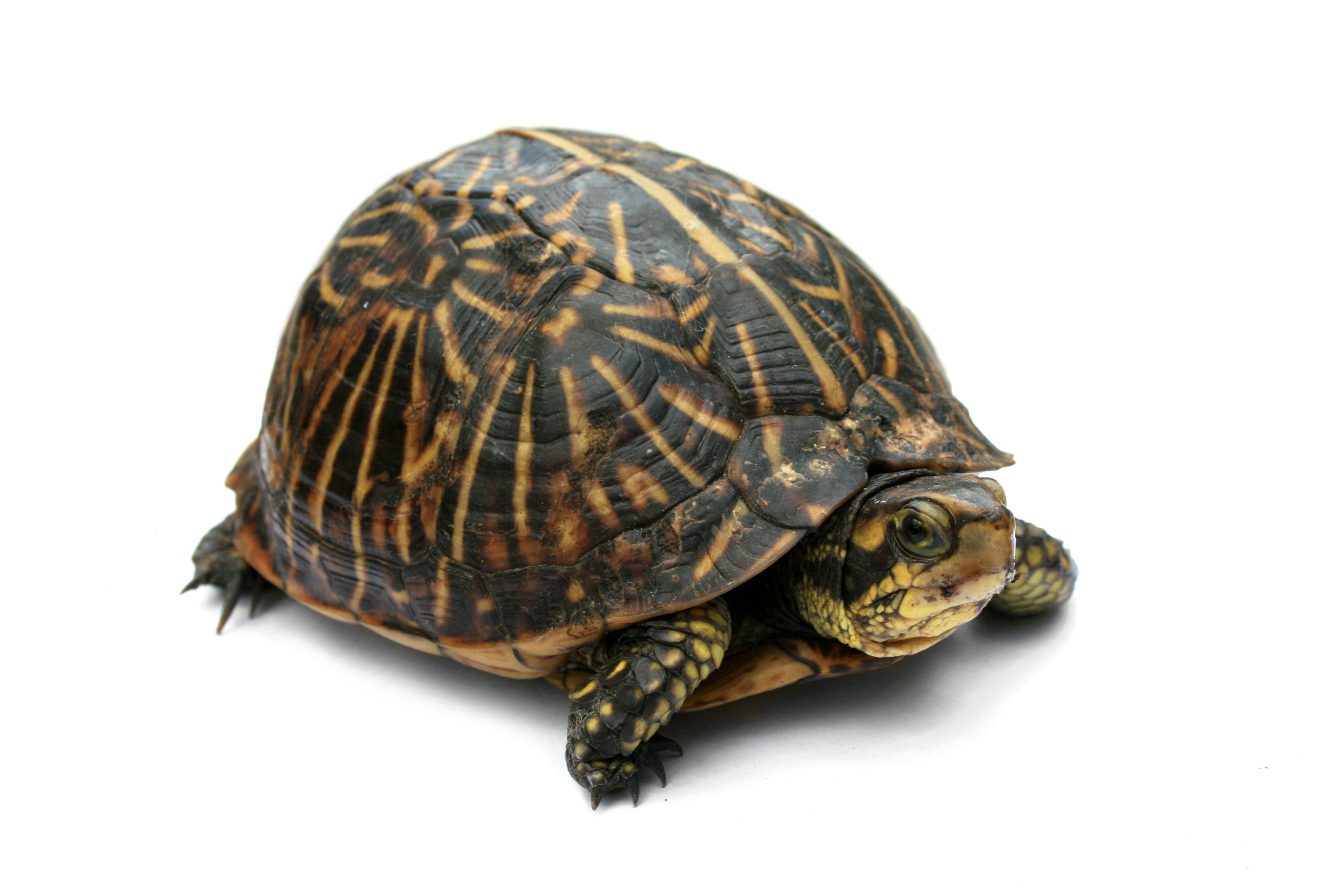
When and where: The math teacher across the hall has this fantastic radio voice and I love listening to his lessons when I have planning periods.  Earlier this week, I heard him holler down the hall at some students who were slowly getting to class after the bell rang: "That's quite the chelonian pace!  Pick it up!"

Level of familiarity: I had never heard chelonian before, but I used my context clues and guessed that it meant to move slowly.

What it means: When I asked the math teacher, he said that it means "turtle" and that he had read a list of words that people should start using.  Merriam Webster online dictionary defines chelonian as turtle as well, and can be used as a adjective to describe something that is like a turtle.

Reflective commentary: I love that he was literally comparing these slow students to a turtle!  It took me quite some time to figure out how chelonian is spelled because I had heard it out loud.  I'm not sure I would have recognized this word in print if I hadn't looked it up right when I heard it. 

Sunday, October 20, 2013

Week 7 - Post 2: Mercurial

When and where: While prepping for my reciprocal teaching assignment, I read through the vocabulary articles that Dr Hopkins posted on the Moodle site.  The one that I chose, Flanigan & Greenwood - Effective Content Vocabulary Instruction in the Middle  (if you are signed into Moodle - the link should work) used mercurial at the end to describe students "in the range of the strange" also known as middle schoolers.


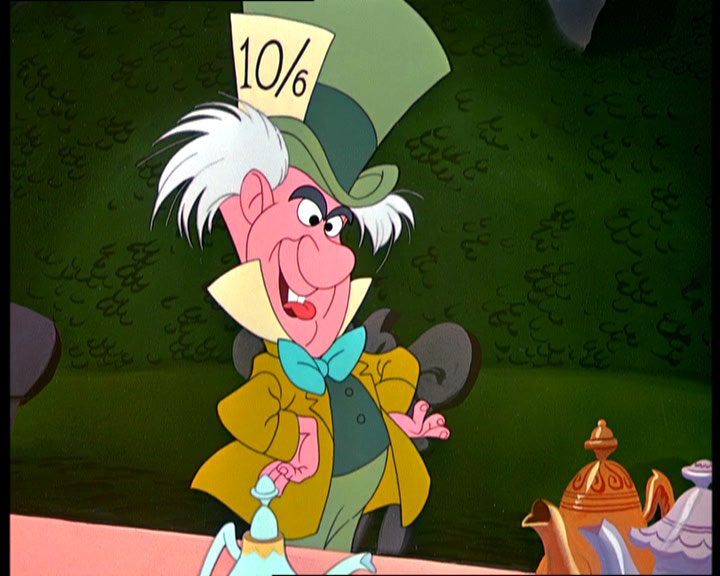
Level of familiarity: Since they already claimed that middle schoolers are "strange" I figured it must have something in common. Before I looked it up, I considered what the root word might be, and I decided on something to do with mercury.  Knowing that mercury was once used to soften beaver pelts used in hats, a practice that caused many hatters to go crazy after extended careers - hence, Mad Hatters - I figured that maybe mercurial had to do with "Mad Middle Schoolers" or otherwise refer to someone who is crazy.

What it means: Well I wasn't totally incorrect.  Merriam Webster online dictionary defines mercurial as an adjective that describes something that is rapidly changing or lively and quick.  When I think about the Mad Hatter, I would happily describe him as mercurial.

aliceinwonderland.wikia.com
Reflective commentary:  The more specific definition didn't change my understanding of the description of middle school students.  However, the online dictionary's definition makes more sense with the introduction of the article, which states "Middle school students are transitional. The term, 'typical middle schooler' is automatically an oxymoron, for there is no such thing."  Instead of simply crazy, they are specifically "crazy" because of their constantly changing lives, emotions, reactions, etc.

Friday, October 18, 2013

Week 7 - Post 1: Expatriation

When and where: I recently made a choice that I didn't think would ever make: I created a Facebook account.  My sister got married and the only way she has chosen to share her photos is via Facebook, so I felt obligated to join in order to see the photos.  Recently, one of my friends from Geneseo posted this article from thehairpin.com on student loan debt, posted on Oct 16, 2013.  In discussing the solutions for student debt, one option was expatriation. 

Level of familiarity: None.  Context clues were non-existent, other than it was provided in a list which included suicide and revolt.  So I knew it had to be a way to get out of paying debts... but I couldn't even guess what it meant.

What it means: Merriam Webster online dictionary defines expatriation as the act of going into exile.  The word "exile" seems to differ from expatriation in that exile is forced and one might still have allegiance to one's country.  Expatriation denotes a resignation of allegiance to one's country.  I'm thinking the root of the word here is patriot - and the prefix "ex" means to remove from patriotism.

Reflective commentary: I wanted to include this word because I had absolutely no context clues to figure this word out.  It was imperative for me to look up the word before I could continue on with the article.  The rest of the article didn't have any other particularly difficult words or new words.

Monday, October 14, 2013

Week 6 - Post 3: Systemic

When and where: Two weekends ago, I was out and about with my friend Mo.  We were discussing the situation in Syria, and Mo referred to the genocide as a "systemic destruction of  the people".  My brain seemed to take special notice of the word systemic, not because I didn't understand it, but because I realized that I have used this word without really having an entire understanding of the word.  Thinking about the word, I usually use it (or hear it used) to discuss something that is total or with a system (pattern or method).
  Level of familiarity: I knew the word and understood the context, but I was confused as to why "systematic" wasn't used instead.  "Systematic" and systemic seem to mean almost the same thing to me and I can't figure out what the difference really is.

What it means: Merriam Webster online dictionary defines systemic as an adjective that refers to the whole (being the whole body or whole group).  The online dictionary defines "systematic" an adjective that describes something that is done in a pattern or by a method.

Reflective commentary: In my conversation with Mo, I think that either systemic or systematic would be used appropriately because both are true for the situation.  I believe that other times I have heard or used systemic it should have been replaced with systematic.  The main difference is that systemic refers to the object being affected and systematic refers to the process by which the object is affected.

Week 6 - Post 2: Dundridge

When and where: During this past weekend's wedding extravaganza, my sister's sister-in-law arranged for all of us to get our makeup done for the ceremony.  As fascinating as this may be to watch the first time, it gets boring fast.  So I poked around and found a Time magazine, published Sept 30, 2013.  (Fun fact: Time publishes cigarette ads, which I thought was totally done away with. Go figure.)   The last article in the magazine was an interview with Richard Dawkins, who specializes in evolutionary biology and coined the word "meme".  This year, he is trying to get dundridge to be a new word.

In this article from Prospect Magazine, Dawkins uses dundridge in context.

Level of familiarity: I have never heard this word - after all, it's new to the language.  However, I have interacted with the concept throughout my life.  And I LOVE this word.

What it means: Dawkins defines dundridge as a person who is bound to rules and therefore makes your life difficult.  In the Time Magazine article, he gives the example of a government employee who would not give a person his passport because he misspelled his name - this government employee is a dundridge because he didn't allow for any bend of the rules.

Reflective comments: As I said before, I am completely in love with this word.  There wasn't a ton of context around the word in use, however I think I have a strong image of the meaning of the word.  I just left a meeting of the district wide 8th grade science teachers in my district.  Two of these teachers are great examples of dundridges because they insist on following every rule to the letter.  We had a recommended agenda, but several of us wanted to stray from the agenda to share materials.  The two dundridges insisted that we get through the agenda first - which was not something we all needed to be in the same room for in order to accomplish.  In the end, we only had 15 minutes to share materials - and as a first year teacher, it feels like no time at all!

Friday, October 11, 2013

Week 6 - Post 1: Pejorative

When and where: My sister got married on Oct. 5, so I spent Friday, Saturday and Sunday in Geneva with our new combined families.  My family has a general lack of love for "fancy" vocabulary.  Apparently the Canadians believe that it is too ostentatious to flaunt ones knowledge.  And my new brother-in-law's family is from Sodus, which has low education stereotypes galore.  I got into a conversation with my sister's mother-in-law who ranted on about how the Common Core is making teachers teach math differently than how she learned it.  She told me that she told it should be the teacher's pejorative to teach however they wanted.  At this point I was done with the conversation and claimed I just remembered something I left... somewhere.

Level of familiarity: I am very familiar with the word "prerogative" which is what I believe this woman meant to say.  However, I had no idea if pejorative was even a real word.  I spent some time poking around Google and experimenting with spellings and it turns out that pejorative is in fact an actual word.

What it means: Merriam Webster defines pejorative as an adjective that describes something with negative connotations, so a word or a situation could be pejorative. It seems to denote a belittling word or criticism specifically.  *sings* "And seldom is heard, a pejorative word".  In fact I might come up with some pejorative words to insult her misuse of the word.

Reflective commentary: I really like that pejorative is a word used to describe other words.  I can see myself using this word with students: instead of saying "That's not a nice word" which makes me feel like I'm five or they're five, I could say, "That was a pejorative word and I will not allow that in my classroom".  Awesome.

Also, I would like to add that my sister's mother-in-law had some pejorative words to say about the Common Core.  Most of which was ill-informed.